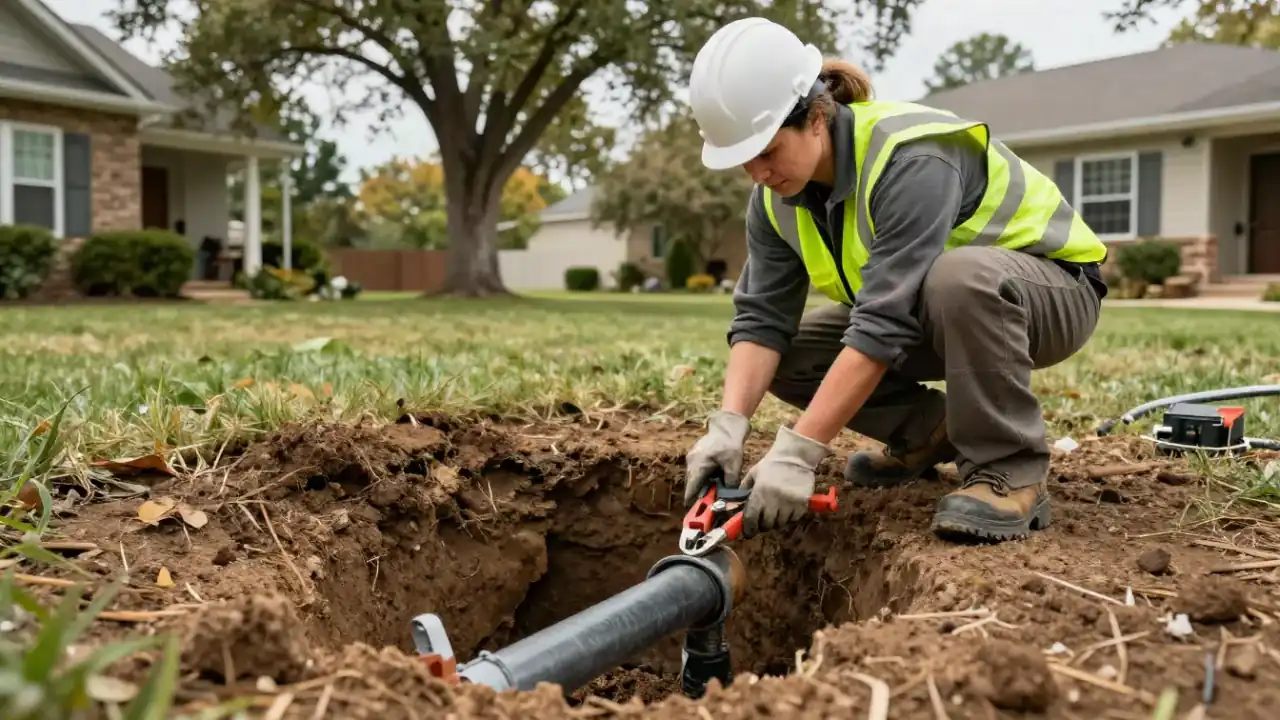
Georgia Red Clay and Underground Pipes
Georgia red clay expands and contracts with every wet-dry cycle, shifting sewer lines in Roswell. Here's what that does to your pipes and when to call us.
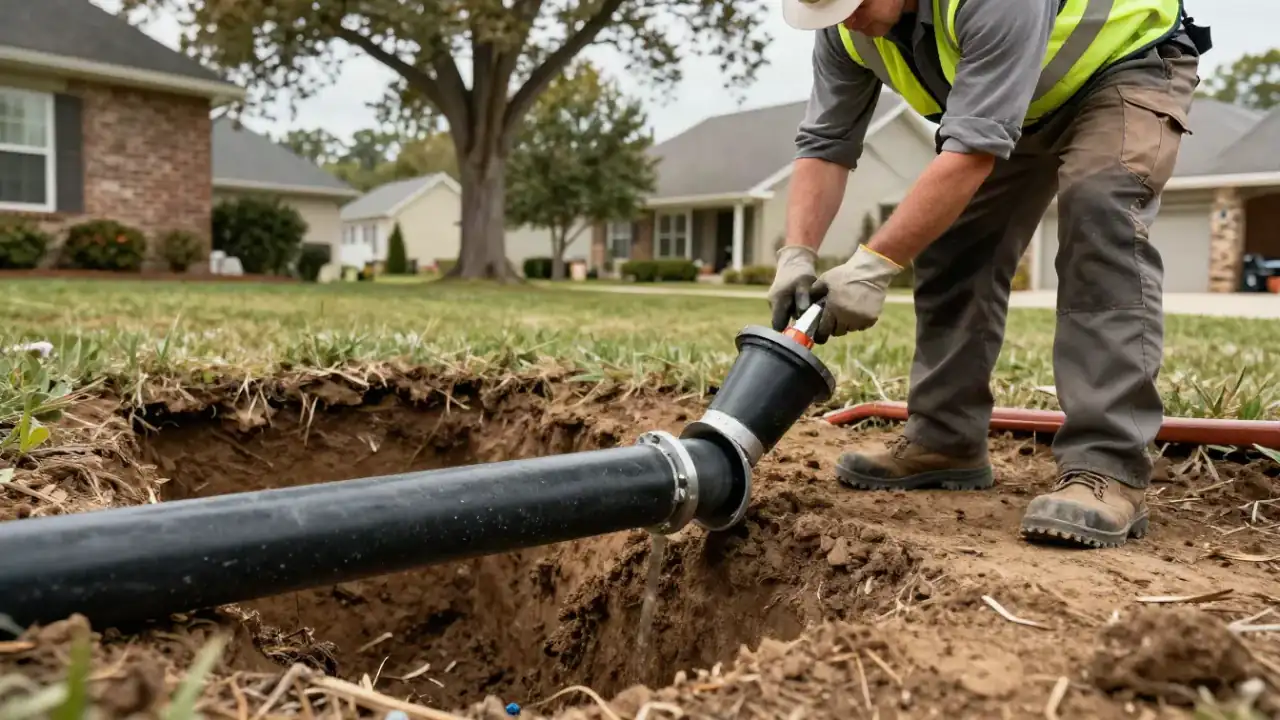
Georgia red clay expands when it soaks up rain and shrinks hard when it dries out, and that constant swell-and-shrink cycle is what moves, cracks, and offsets sewer lines buried under Roswell yards. If your line was installed in clay-heavy ground, the soil around it is never truly stable - it flexes with every wet season and every dry spell, and your pipe pays the price.
We've pulled enough collapsed clay-bedded pipe out of Roswell yards to know exactly what this soil does over ten, twenty, thirty years. Below we break down why red clay is so hard on underground pipes here, what the damage actually looks like, and how to tell whether your line is already shifting.
What Georgia red clay does to underground pipes in Roswell
Georgia red clay and underground pipes Roswell GA is really a story about water movement. Clay particles are microscopic and flat, and they hold onto water instead of letting it drain. When they're saturated, they swell - sometimes by 10% or more of their volume. When they dry, they shrink back and pull away from whatever they were touching, including your pipe.
That expansion and contraction exerts pressure measured in thousands of pounds per square foot against a buried line. PVC and cast iron can take some of it. They cannot take thirty years of it without moving. The pipe shifts, joints open, and the bedding material underneath washes out. Once that happens, the line is on a countdown.
We see the same pattern in neighborhoods across the metro, which is why our Sewer Line Repair Roswell GA crews keep clay-specific tooling on every truck - cutting heads sized for clay-packed pipe, and cameras that can read a shifted joint through muddy water.
Why Roswell's soil is harder on pipes than most of metro Atlanta
Roswell sits on some of the heaviest red clay in Fulton County, and the neighborhoods built here between the 1970s and 1990s put thousands of feet of sewer lateral into that clay with bedding practices we would not use today. In older parts of town, cast iron and Orangeburg pipe are still in the ground. In newer subdivisions, it's mostly Schedule 40 PVC - but PVC has its own failure modes in clay.
Two things make Roswell worse than, say, a sandy-soil suburb south of the city:
- Topography. Roswell has real hills. Water runs downhill through clay and finds the trench your sewer line sits in - the trench becomes a French drain, and the pipe floats or settles.
- Tree canopy. Mature hardwoods everywhere. Roots follow moisture, moisture follows the trench, and roots find the pipe.
We work the same problem in Sewer Line Repair in Alpharetta just up the road - same clay, same trees, same failure curve. If your neighbor two streets over had a collapse last spring, your odds of the same thing went up.
How red clay causes sewer line damage in Roswell Georgia
Red clay soil sewer line problems Roswell Georgia homeowners call us about fall into four buckets, and they almost always show up in this order.
1. Joint separation and offset
The pipe moves a half inch. The joint opens. Soil and groundwater seep in. Once soil is inside the pipe, it settles at the low point and starts catching everything else. A joint that was tight in 1995 is a two-inch offset by 2026.
2. Bellying
Clay soil under a pipe washes out, the pipe loses its bed, and a low spot forms. Wastewater pools there. Paper and solids collect. You get repeat backups at the same fixture no matter how many times you snake it. We handle this with bellied pipe repair Roswell GA - either re-bedding the sagging section or replacing it depending on how bad the belly is.
3. Cracking and crushing
When clay dries, it shrinks and pulls away. When it re-wets, it slams back against the pipe. Cast iron cracks. PVC shears at the joint. Orangeburg just collapses. A crushed line is a full replacement, not a patch.
4. Root intrusion at the newly opened joints
Roots don't break a healthy pipe. They find the crack clay movement already made. Once they're in, they grow into a mat that catches everything and turns a small problem into a Saturday-night emergency. That's a root intrusion repair Roswell GA call, and it's one of the most common we run.
Signs red clay is shifting your sewer line right now
You don't need a camera to suspect clay movement. You need to notice the pattern.
- Backups that come back. You snake the line, it runs fine for six weeks, then backs up again at the same spot. That's a belly or an offset, not a clog.
- Multiple slow drains. One slow drain is a local clog. Three slow drains on the same floor means the main is compromised.
- Soggy spots in the yard. A wet patch over the sewer route in dry weather is a break or a separated joint.
- Sewer smell outside. If you catch it near the cleanout or along the trench line, gas is escaping where it shouldn't.
- Foundation cracks appearing after a dry summer. Clay pulls away from the foundation and from the pipe at the same time. The two go together.
Any two of those together is enough to justify a camera inspection. A sewer camera inspection Roswell GA takes about 45 minutes and tells you exactly what the clay has done.
What to do about red clay pipe shifting in Roswell GA
What to do about red clay pipe shifting in Roswell GA depends on how far the movement has gone. There are three realistic paths, and we walk every customer through which one fits their line before we touch a shovel.
If the shift is small and localized
One joint, one crack, one root cluster - we can often fix it in a day. Spot repairs on clay-shifted lines run roughly $1,200 to $3,500 in 2026 pricing, depending on depth and how much yard we have to open. We cut out the bad section, re-bed it in gravel instead of native clay, and tie it back in.
If the line is offset or bellied over a longer run
Replacement is usually the honest answer. Trenchless methods let us do it without tearing up the whole yard. trenchless sewer line repair Roswell GA pulls a new HDPE pipe through the old one or bursts the old pipe outward - either way, the new line goes in with proper bedding and no clay-to-pipe contact.
If the pipe is cracked but still structurally sound
Cured-in-place lining is the right call for hairline cracks and early-stage joint wear. A resin-saturated liner goes inside the existing pipe, cures, and forms a new pipe within the pipe. No digging. We run sewer pipe lining Roswell GA on a lot of 1980s and 1990s PVC that's cracking at the joints but hasn't collapsed.
What we do not recommend: snaking the same line every six months and hoping. That's a $250 visit turning into a $9,000 emergency when the pipe finally crushes under a full load.
Common mistakes homeowners make with clay soil pipe problems
We've watched homeowners spend real money on the wrong fix more times than we can count. Here's what to avoid.
- Treating a clay-shifted line like a clog. If a snake fixes it for a month and it comes back, stop snaking. Get a camera on it.
- Using chemical drain cleaner on a main line. It eats the pipe walls and does nothing for a belly or an offset.
- Ignoring the yard. That soggy patch in August is not a sprinkler issue. It's the pipe.
- Planting trees over the lateral. Maples, oaks, and willows will follow the trench. Keep new plantings 10 feet off the sewer route.
- Waiting until it's an emergency. A planned replacement in October costs a fraction of a holiday-weekend emergency repair with a flooded basement.
One more: don't assume a newer house is safe. We've seen 2015 builds in clay-heavy Roswell subdivisions with joint offsets already, because the original bedding was native clay and the pipe has been moving since day one.
When to call a professional
Call us when the pattern shows up - repeat backups at the same fixture, multiple slow drains, a wet spot over the lateral, or sewer odor in the yard. Those are the four signs that clay has already moved your line, and they do not resolve on their own.
Roswell Sewer Line Repair runs camera inspections across Roswell and the surrounding north Fulton neighborhoods, and we'll tell you straight whether you're looking at a spot fix, a lining job, or a replacement. No pressure, no upsell - just the video and a clear recommendation.
Frequently Asked Questions
How does Georgia red clay affect underground pipes in Roswell GA?
Red clay swells when wet and shrinks when dry, and that cycle pushes and pulls on buried pipe until joints separate and the pipe loses its bed. Over 20 to 30 years, that movement causes offsets, bellies, cracks, and eventually collapse.
Can red clay cause sewer line damage in Roswell Georgia?
Yes - it's one of the leading causes of sewer line failure here. Clay movement opens joints, roots find the openings, and the line degrades from the inside. Most of the collapsed lines we replace in Roswell started as a clay-shifted joint.
What to do about red clay pipe shifting in Roswell GA?
Get a camera inspection first - that tells you whether it's a spot repair, a lining job, or a full replacement. Spot repairs typically run $1,200 to $3,500; trenchless replacement runs higher but avoids tearing up the yard.
Does red clay cause pipe shifting in Roswell GA?
Yes. Clay expansion and contraction is the main driver of pipe shifting in this area. A line bedded in native clay will move over time no matter how well it was installed, because the soil around it never stops changing volume.
How often should I have my sewer line inspected in Roswell?
Every 3 to 5 years if your home was built before 2000, and any time you get a repeat backup. If you're buying a home in Roswell, get a sewer scope before closing - it's the cheapest $300 you'll ever spend.
Get help with Sewer Line Repair in Roswell
If red clay has already moved your line, we can tell you exactly what's happening and what it takes to fix it. Call Roswell Sewer Line Repair at (770) 214-4809 and we'll get a camera in the line and a straight answer in your hands the same week.