Focused arrival windows
Useful updates and clear arrival timing.
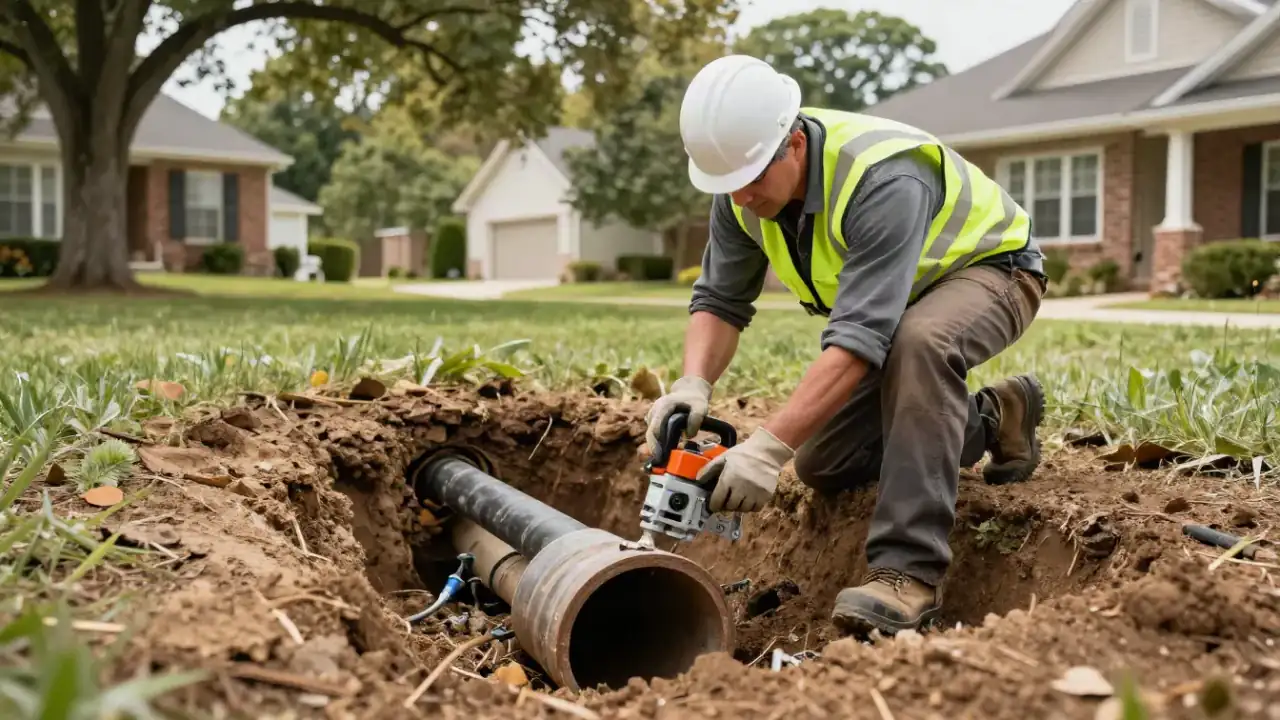
When you need Sewer Line Repair in Sandy Springs, you need a crew that knows the older clay lines under Downtown Sandy Springs and the mature root systems around Perimeter Center. We run a sewer camera first, show you the footage, and fix the line with trenchless methods whenever the pipe allows. No guesswork, no torn-up lawns, no surprise invoices.
Useful updates and clear arrival timing.
Review the approach and price before deciding.
Equipped vehicles and respectful cleanup.
Neighbors serving neighbors with follow-through.
Sewer Line Repair in Sandy Springs is a category of plumbing work that clears, patches, or replaces the pipe carrying waste from your home to the city main, and it is needed the moment waste stops moving the way it should. We work Sandy Springs every week, from the 1960s ranches near High Point to the newer builds around North Springs. That matters because the failure pattern changes block by block. Homes in 30328 with original clay laterals fight root intrusion and offset joints, while properties closer to the Chattahoochee River National Recreation Area deal with a high water table that shifts soil and bellies pipe. We run a RIDGID sewer camera through the line, mark the depth with a pipe locator, and give you a straight answer about whether spot repair, CIPP lining, or full replacement is the right call. You get the footage, the plan, and a fixed price before we cut anything.
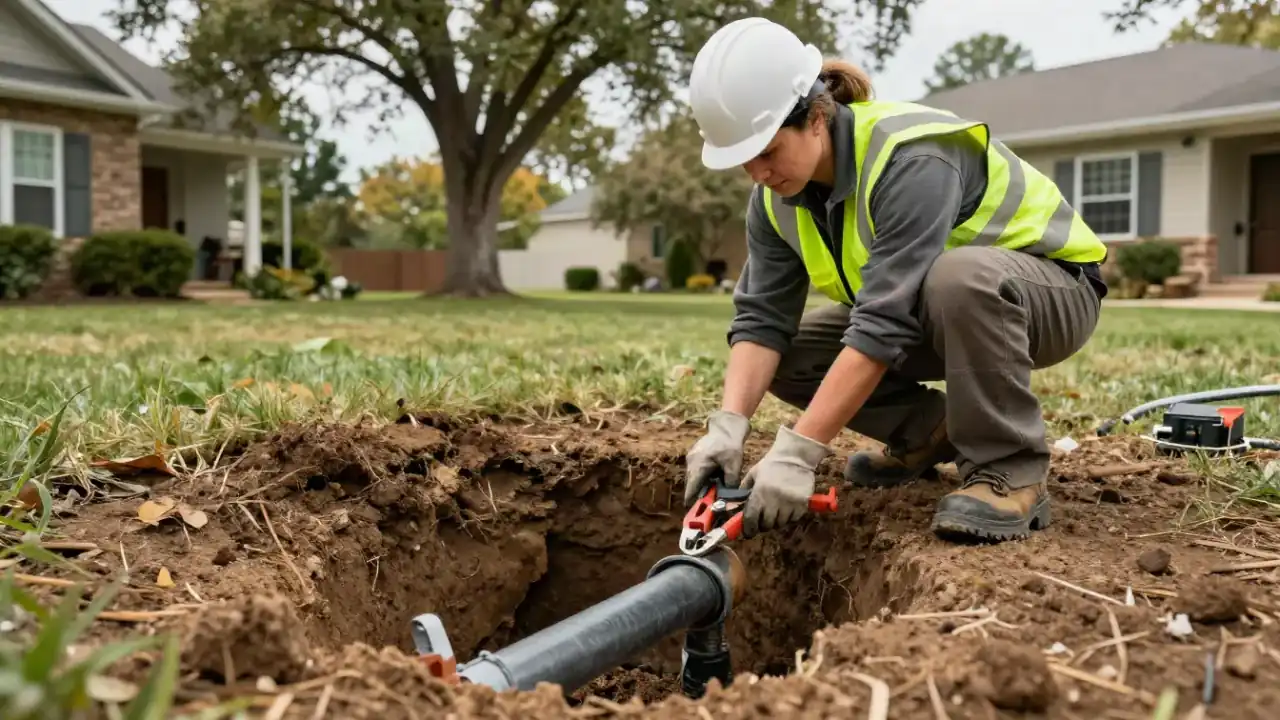
Sandy Springs sewer lines fail in predictable ways, and the fix depends on what the camera shows. A cracked pipe under a driveway in Perimeter Center is a different job than a root-choked clay lateral near High Point. If you are searching for sewer line repair near me Sandy Springs GA, here is what we actually do in this city, and how each service fits the housing stock and soil you are dealing with.
Trenchless work is our default in Sandy Springs because so many yards here have mature landscaping, driveways, and hardscaping we would rather not destroy. We dig two small access pits, then pull or line the new pipe through the old run. It works well on the long laterals common in North Springs and saves the oak roots that make these lots worth living on.
View service →02CIPP lining is the right call when your Sandy Springs lateral is cracked or corroded but still round and structurally sound. We invert an epoxy resin liner through the pipe, cure it in place, and you end up with a smooth new interior inside the old host pipe. It is a strong fit for the 1970s and 1980s builds around Riverside where the pipe has aged but the grade is still good.
View service →03When a Sandy Springs line is collapsed, badly bellied, or undersized, pipe bursting replaces it without a full open trench. A bursting head pulls new HDPE pipe through while fracturing the old clay or cast iron outward. We use it on the deeper runs near Perimeter Mall where open excavation would mean tearing up a driveway or a commercial lot.
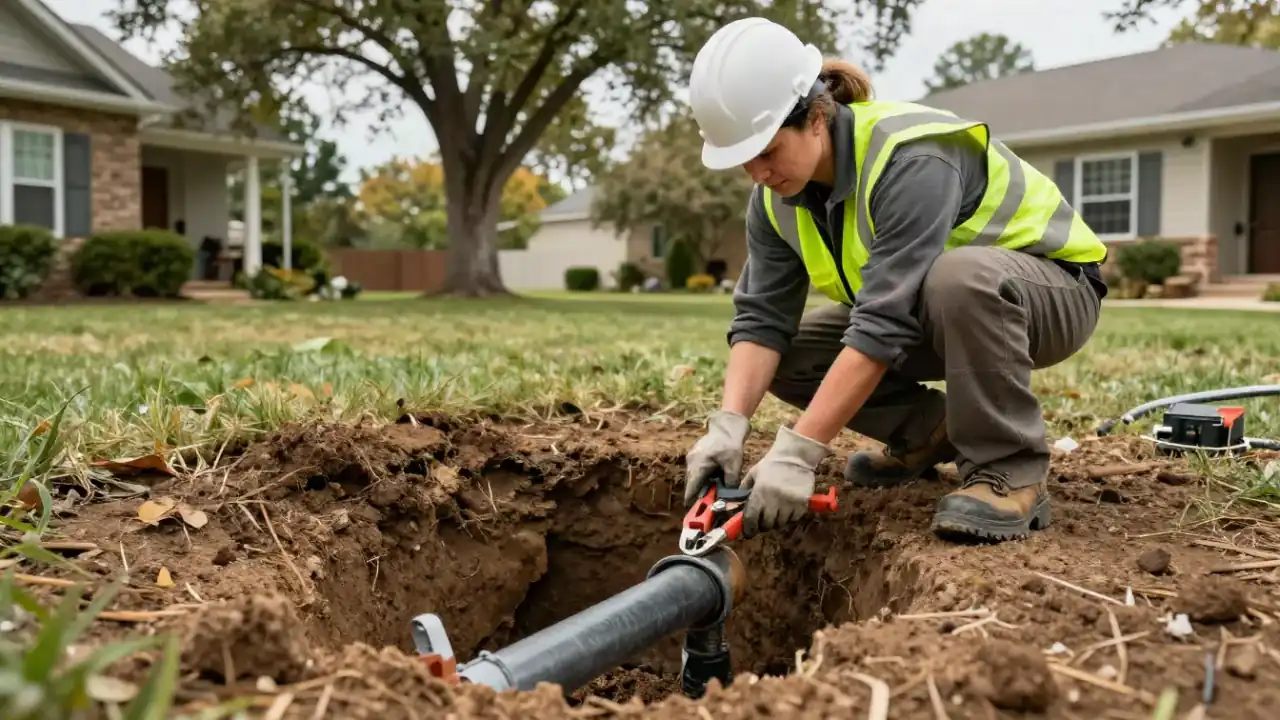
View service →04Not every Sandy Springs problem needs a full replacement. If the camera shows one cracked section, one bad joint, or a single root entry point, we cut out that section and couple in new PVC pipe. It is faster and cheaper, and it is often the honest answer for a homeowner in 30328 who was told they needed the whole line replaced.
View service →05Every job starts here. We push a RIDGID camera through the line, locate the depth and distance of any defect with a pipe locator, and record the footage. For Sandy Springs buyers and sellers, this is also the fastest way to settle a sewer question before closing. You see exactly what we see, on screen, in real time.
View service →06Root intrusion is the number one call we get in Sandy Springs, and it is not close. The mature trees around Heritage Sandy Springs and the older neighborhoods send fine roots into every joint and crack. We cut the roots with a root cutter, hydro-jet the line clean, and then either line the pipe or treat it with RootX to slow the next round of growth.
View service →07A backup is an emergency, and we treat it like one. When sewage backs into a Sandy Springs basement or a ground-floor drain, we clear the blockage first, then camera the line to find out why it happened. Clearing without diagnosing is how you end up with the same backup three months later. We fix the cause, not just the symptom.
View service →08Sandy Springs real estate moves fast, and a failed sewer lateral can kill a closing. We inspect the line, camera it end to end, and deliver a clear written report with footage. Buyers in 30342 and 30350 use it to negotiate; sellers use it to prove the line is sound. Either way, you get facts instead of a guess.
View service →09Clay soil and decades of settling push Sandy Springs pipe out of alignment. An offset joint catches debris; a bellied section holds standing water. Both show up clearly on camera. We fix offsets with spot repair or lining, and we correct bellies by re-grading the run or replacing that section with new pipe set on proper bedding.
View service →Sandy Springs jobs have their own rhythm, and we plan around it. Permits for sewer work in Fulton County run through the city, and we pull them before we break ground. Access is the other big variable. Lots around Downtown Sandy Springs and Riverside are tight, with fences, retaining walls, and mature trees crowding the easement, so we scope the route before the truck arrives. The clay soil here holds water after a wet winter and turns hard as brick by August, which changes how we dig and how we bed new pipe. We schedule most work between 8 a.m. and 4 p.m., and we offer same-day sewer line repair Sandy Springs GA for active backups. If you need trenchless sewer line repair Sandy Springs, we can usually camera the line one day and line it the next. Every job ends the same way: we run the camera again, confirm the fix, and leave the yard as close to how we found it as the work allows.
Roots enter at every joint and crack, slow drainage over months, then cause a full blockage. By the time a Sandy Springs homeowner notices, the line is often already holding standing water and debris. We cut roots with a root cutter, hydro-jet the line clean, then camera it to see the damage. If joints are opening, we line the pipe with CIPP or spot-repair the worst sections and treat the line with RootX to slow regrowth.
Groundwater keeps trench walls wet and unstable, which makes open excavation slow and risky. It also accelerates corrosion on older cast iron and can leave a bellied section holding water year-round. We favor trenchless methods on these properties, since two small pits beat a long open trench in wet ground. When we do dig, we dewater and shore the pit properly, then bed new pipe on compacted stone so it stays on grade.
Driveways, retaining walls, and decades-old plantings sit right over the lateral on many Sandy Springs properties. A careless dig can cost more to repair than the sewer job itself. We locate the line with a pipe locator and mark the route before we cut. Trenchless lining and pipe bursting let us replace the pipe through two small access pits, preserving the driveway and the root systems that make these lots valuable.
Sewer work in Sandy Springs must be performed or supervised by a licensed plumbing contractor. We hold the license, pull the permit, and schedule the inspection so the job closes clean with the city.
Repairs and replacements on the private lateral require a permit and an inspection before backfill. We handle the paperwork and the inspection, so you are not chasing the city while your yard sits open.
Lined pipe is only as good as the installation. Our CIPP work follows the NASSCO standard for liner thickness, cure, and testing, which is what protects the warranty and the pipe for decades.
Sandy Springs has a specific set of conditions that drive sewer line failures: mature trees, clay soil, a high water table near the river, and a housing stock that spans from the 1950s to new construction. Those factors combine to produce the same four problems over and over. If you live here long enough, you or a neighbor will deal with at least one of them.
The mature hardwoods around Heritage Sandy Springs and the older neighborhoods send fine roots toward moisture. Clay laterals have joints every few feet, and those joints are the easiest entry point. Roots start small and grow into a mat that catches everything you send down the drain. We cut the roots with a root cutter, hydro-jet the line clean, and camera it to assess the damage. If joints are opening, we line the pipe with CIPP to seal them, then treat the line with RootX to slow regrowth. Clearing alone just resets the clock.
The clay soil common across Fulton County expands when wet and shrinks when dry. That cycle shifts pipe over decades, opening joints and creating ledges where debris catches. Homes in 30328 and 30342 with original clay laterals are the most common calls we get for this. A camera inspection shows exactly where the offset is and how bad it is. Minor offsets get a spot repair or a CIPP liner that bridges the gap. Severe offsets get that section replaced with new PVC pipe bedded on compacted stone so it stays on grade.
A belly is a low spot in the line where water and debris collect instead of draining. Wet ground near the Chattahoochee River National Recreation Area and decades of settling both contribute. The pipe does not have to crack to cause backups; it just has to sag enough to hold water. We locate the low spot with the camera and a pipe locator, then excavate that section. We re-grade the run and replace the sagging pipe with new material on proper bedding. When the grade allows, we can also line the section to restore flow without a full replacement.
Older Sandy Springs homes often still have cast iron or clay laterals that have been in the ground for 50 years or more. Cast iron corrodes from the inside out, and clay pipe cracks under root pressure and soil movement. Both fail gradually, then all at once. We camera the line to see how much of it is still sound. If the damage is localized, a spot repair or CIPP lining extends the life of the pipe. If the line is failing along most of its length, trenchless replacement with HDPE pipe is the durable fix, and it avoids tearing up the yard.
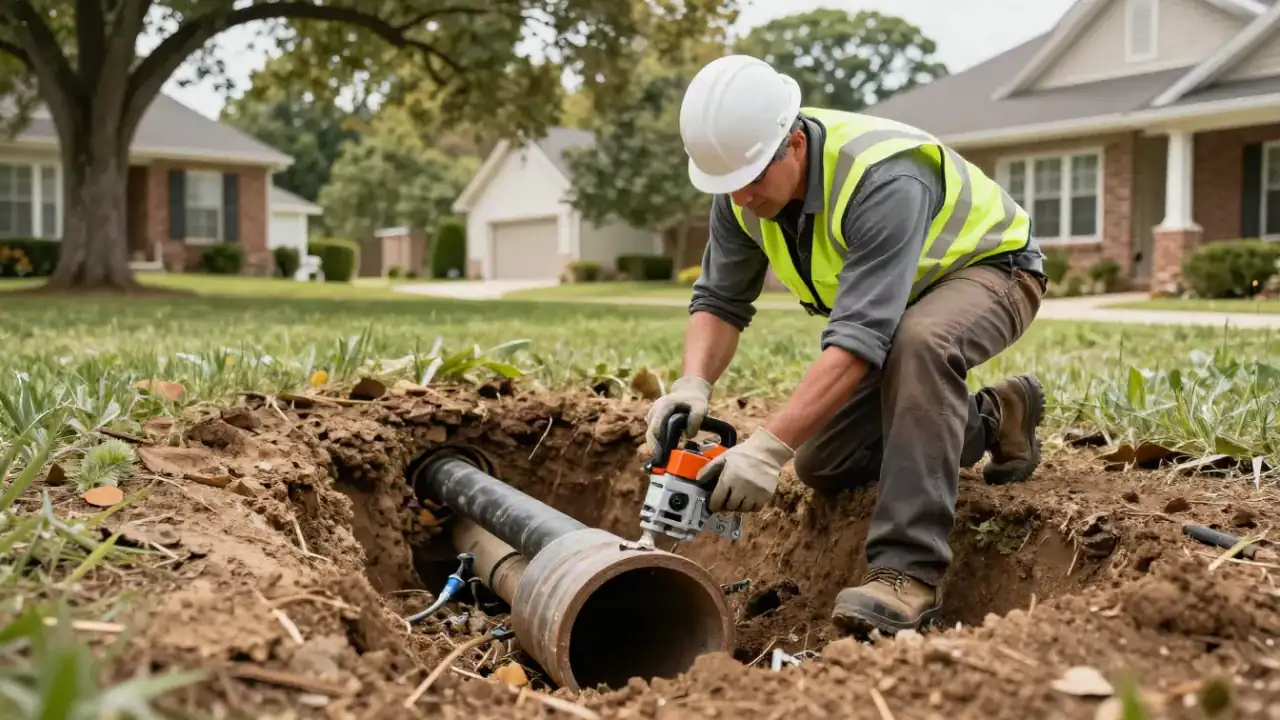
Sewer line repair in Sandy Springs is not a flat-rate job, and anyone who quotes one over the phone is guessing. Typical 2026 pricing in this area starts around $250 to $600 for a camera inspection and drain clearing, $1,800 to $4,500 for a spot repair or short CIPP lining, and $6,000 to $15,000 for a full trenchless replacement, depending on length, depth, and access. The variables that move the number most are how deep the line sits, how much of it is damaged, and whether we can reach it trenchlessly. A long lateral under a driveway near Perimeter Mall costs more to replace than a short run in an open side yard. We give you a fixed price after the camera inspection, before any work starts.
Deeper lines and longer runs require more excavation, more pipe, and more labor. A 60-foot lateral under a driveway in North Springs is a bigger job than a 25-foot run with easy access, and the price reflects that difference.
One cracked section is a spot repair. Multiple failures, a collapsed section, or widespread root intrusion usually mean lining or replacement. The camera tells us which, and we price the fix that actually solves the problem rather than the cheapest temporary patch.
Tight lots, finished landscaping, and hardscaping add cost because they change how we get to the line. Trenchless methods cost more upfront than open trenching but often save money overall by preserving driveways, patios, and mature trees.
Sandy Springs is easy to work once you know the landmarks. We route crews by Perimeter Mall, Sandy Springs City Center, and the Chattahoochee River National Recreation Area, because those names mean something to a dispatcher and a customer alike. When you call, tell us the nearest landmark and we can usually place your street without a long explanation. That saves time on emergency calls, especially when a backup is active and every minute matters.
A central anchor on the east side of Sandy Springs. It helps us orient crews working the surrounding residential streets and commercial properties, and it is a useful reference point when giving arrival times.
The civic core near the downtown area. We use it to route toward the older residential streets and to coordinate permit and inspection logistics with city offices.
Marks the western edge of the city. It helps us place properties near the river where the water table runs higher and trenchless methods are usually the better fit.
A well-known local landmark near the downtown area. It is a handy reference for directing crews into the surrounding older neighborhoods with mature trees and clay laterals.
A major campus on the north side of the city. It helps us orient toward the surrounding residential streets and plan routes around the heavier daytime traffic.
A major commercial and office district with a dense mix of buildings and parking areas. Sewer runs here are deeper and carry heavier flow, which makes camera inspection and trenchless repair the practical approach.
The civic and business core of the city, with a mix of offices, restaurants, and residential streets nearby. Tight access and mature landscaping make trenchless methods a good fit for lateral work.
A major transit stop on the north line, with quick access to the surrounding commercial district and nearby residential streets. Useful as a routing reference for crews working the east side.
The main north-south highway through Sandy Springs. It shapes how we route crews across the city and how quickly we can reach calls on either side of the corridor.
We work across Sandy Springs, from the older streets near Downtown Sandy Springs to the larger properties off High Point. Each area has its own pipe era and soil conditions, so we adjust the approach to the neighborhood, not the other way around. Here are four areas we cover regularly.
The older housing stock here often still runs original clay laterals, and the mature trees along the residential streets are a constant source of root intrusion. Tight lots mean trenchless methods usually beat open excavation. We are typically on site within 45 minutes for emergency calls in this area.
A mix of commercial buildings and nearby residential streets, with deeper sewer runs and heavier daily flow. Pipe bursting and CIPP lining work well here because open trenches would disrupt driveways and parking. Access is straightforward off the main roads, so we can schedule same-day inspections most weekdays.
Longer laterals and larger lots are common, and the clay soil shifts enough to create offset joints and bellies over time. Camera inspection is essential before anyone quotes a replacement. We route through the North Springs area daily and can usually reach a call within an hour.
Closer to the river, the water table runs higher and the ground stays wetter. That accelerates corrosion on older pipe and makes trenchless lining the smarter choice on most properties here. We know the streets well and can be on site quickly for backups or emergency repairs.
These are the kinds of jobs we run in Sandy Springs every week. The details change, but the pattern does not: camera first, honest diagnosis, then the least invasive fix that actually solves the problem. Here are three recent examples from around the city.
A homeowner near Downtown Sandy Springs had slow drains throughout the house and a wet spot in the yard after every rain. The line was original clay and more than 50 years old. We ran a sewer camera and found root intrusion at four joints plus a cracked section under the front walk. Rather than trench the walkway, we cut the roots, hydro-jetted the line, and installed a CIPP liner through the damaged run. The whole job took two days. Drain flow returned to normal, the yard stayed intact, and the camera confirmed a smooth, sealed liner at the final inspection. The homeowner avoided replacing the driveway.
A property near Perimeter Center had repeated backups in a ground-floor drain. A previous contractor had cleared the line twice without finding the cause. Our camera showed a bellied section holding standing water and debris about 40 feet out. We excavated one access pit, re-graded that section, and replaced it with new PVC pipe bedded on compacted stone. We then camera-verified the entire run. No backups in the months since, and the drain now empties fast. The fix addressed the cause instead of clearing the symptom a third time.
A seller in North Springs needed a sewer lateral inspection before closing, and the buyer's agent flagged the line as a possible deal-breaker. We inspected the full lateral, recorded the footage, and found one offset joint with minor root intrusion but no structural failure. We performed a spot repair on the offset joint and provided a written report with before-and-after footage. The report satisfied the buyer, the spot repair cost a fraction of a full replacement, and the sale closed on schedule. The seller kept the documentation for their records.
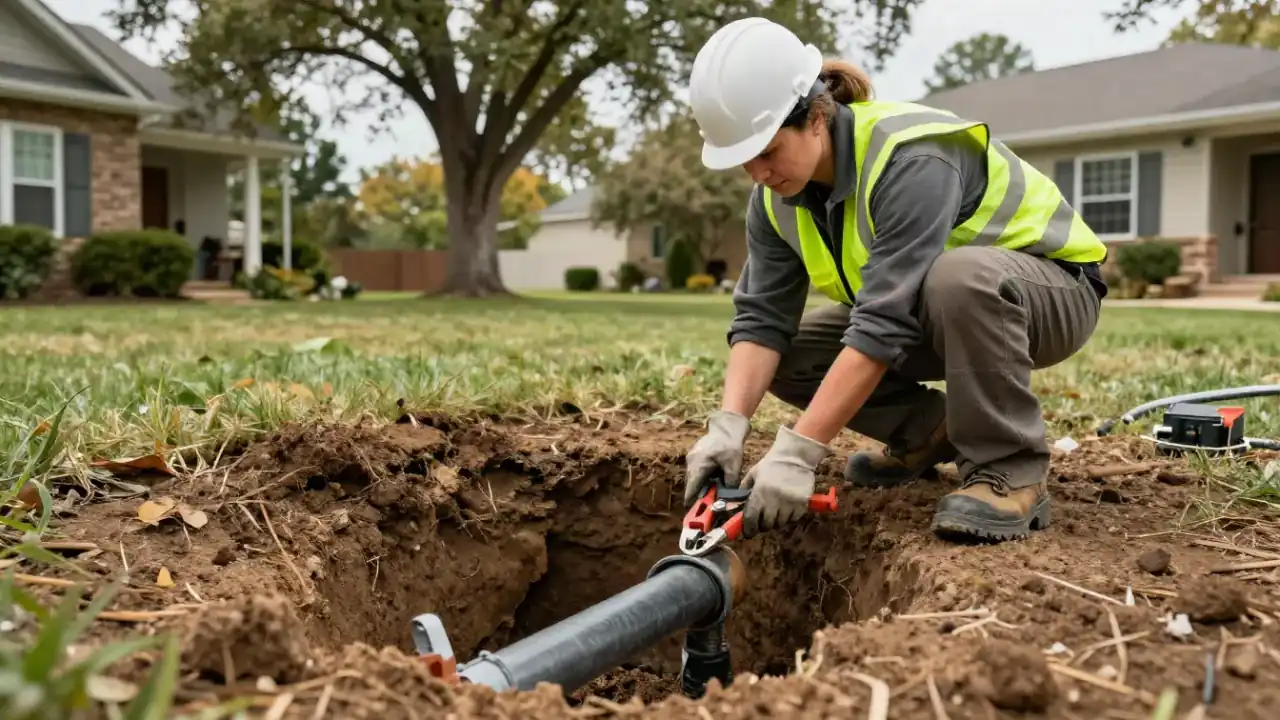
We had sewage backing into the basement on a Sunday night. They answered, had a tech out within the hour, and cleared the line that night. The camera showed roots at three joints, and they came back Tuesday to line the pipe. Straight pricing, no upsell, and they cleaned up better than they found it. I have already passed their number to two neighbors.
We were selling our house near Perimeter Mall and the buyer's inspector flagged the sewer line. They came out the next morning, cameraed the whole lateral, and found one offset joint. Spot repair instead of a full replacement, and they gave us the footage and a written report. That report is what saved the closing. Honest work and fair pricing.
Slow drains for months and a soggy spot in the yard. They ran the camera, showed me the cracked clay pipe on the screen, and explained why lining made more sense than digging up my oak trees. Two days later the line was lined and the drains were back to normal. They left the yard clean and the price matched the quote exactly.
Sandy Springs does not get hard freezes often, but the seasons still shape when sewer lines fail and how we work on them. Fall and winter bring root activity and wet ground; spring and summer bring heavy rain and dry, hard clay. Knowing what to expect each season helps you catch a problem before it becomes an emergency.
Heavy spring rain saturates the clay soil and raises the water table near the river. That extra groundwater finds its way into cracked pipes and loose joints, and backups become more common. Roots also start their first growth push of the year.
Dry weather shrinks the clay soil, which shifts pipe and can open joints or worsen a belly. Heavy water use from irrigation and household activity pushes more volume through already-restricted lines. Root mats from spring growth are now large enough to cause blockages.
Roots are still growing and looking for moisture as the soil dries out. Falling leaves and debris can enter the line through cracks and open joints, adding to an existing blockage. This is the season when many slow drains turn into full backups.
Sandy Springs rarely sees a deep freeze, but when temperatures drop below freezing, shallow pipes and slow-moving lines are at risk. Cold weather also means more indoor water use, which stresses a restricted line. Backups in winter are the most disruptive because they happen when you least want to deal with them.
Sandy Springs sits in the middle of our service region, which means we can reach most of north Fulton and the surrounding communities without a long drive. If you are just outside the city limits, we probably cover you. Here are a few of the nearby areas we serve regularly, along with how they relate to Sandy Springs.
A short drive from Sandy Springs, with older homes that share the same clay lateral and root intrusion issues we see in the city.
Local coverage and details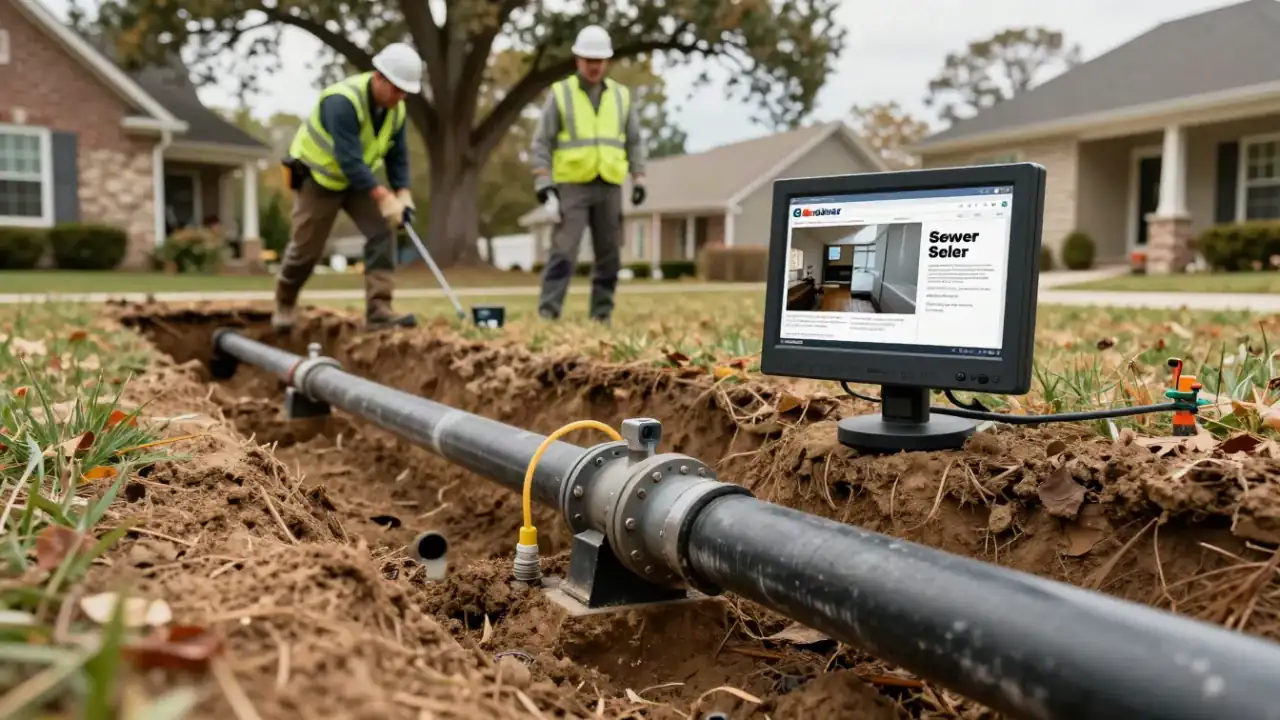
Just north of Sandy Springs along the river corridor, with larger lots and wetter ground that favors trenchless repair methods.
Local coverage and details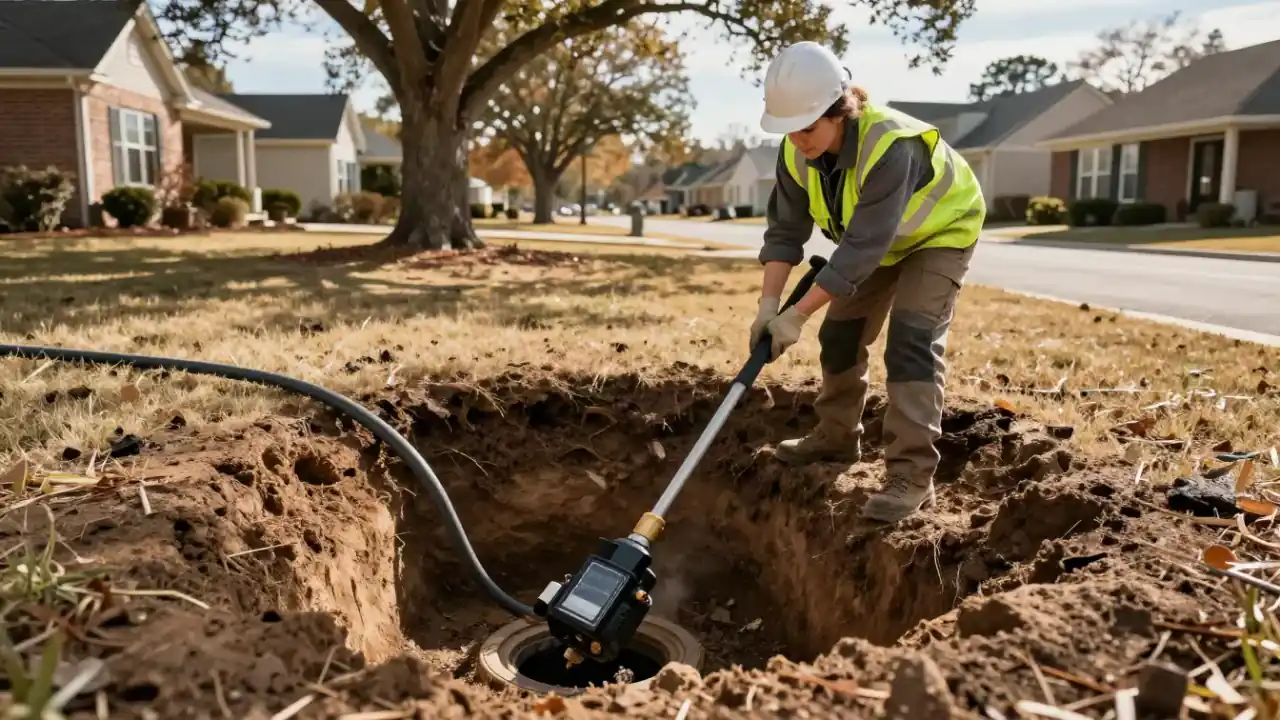
A nearby Roswell community with mature trees and established landscaping, where root intrusion is a common reason customers call us.
Local coverage and detailsClose to Sandy Springs and served on the same routes, with a mix of older and newer homes and similar clay soil conditions.
Local coverage and detailsSewer line work is expensive enough that you should not hand it to the first company that answers the phone. The difference between a good contractor and a bad one usually shows up in how they diagnose the problem and how they price the fix. Ask these five questions before you sign anything, and you will avoid most of the bad outcomes.
A contractor who diagnoses without a camera is guessing. You should see the inside of your own pipe, on screen, before anyone tells you what it needs. If they will not show you the footage, they are either skipping the inspection or hiding something.
The honest answer depends on the camera findings. A single cracked section is a spot repair. Widespread damage is a replacement. A contractor who jumps straight to replacement without showing you why is selling, not diagnosing. Ask them to explain the reasoning.
Sewer work in Sandy Springs requires a licensed plumbing contractor and a permit for lateral repairs. Ask for the license and proof of insurance. An unlicensed crew can leave you with a failed inspection, a voided warranty, and no recourse if something goes wrong.
You want a fixed price for a defined scope: the repair, the permit, the inspection, and the restoration. Ask what happens if the crew finds something unexpected once they start. A good contractor prices the job after the camera inspection, not before.
A sewer repair should come with a written warranty on the workmanship and the materials. Ask how long it lasts and what it covers. A contractor who will not put the warranty in writing is telling you something about how much they stand behind the job.
NASSCO
OSHA
Georgia Association of Plumbing Inspectors
$2M general liability plus workers compensation
Member
Member
Most Sandy Springs sewer line repairs run $1,800 to $4,500 for a spot repair or short CIPP lining, and $6,000 to $15,000 for a full trenchless replacement. Camera inspection and drain clearing typically run $250 to $600. The biggest cost drivers are line depth, length, and how much of the pipe is damaged. We give you a fixed price after the camera inspection, before any work starts.
The right company is the one that cameras the line first, shows you the footage, and prices the fix before starting. Look for a licensed Georgia plumbing contractor with trenchless capability and a written warranty. We work Sandy Springs every week, carry a RIDGID camera and CIPP liner rig on the truck, and give you a fixed price after the inspection. Call and we will show you what we find.
It depends on what the camera shows. One cracked section or a single offset joint is usually a spot repair or a short CIPP lining. Widespread cracking, a collapsed section, or root intrusion along most of the line usually means replacement. In Sandy Springs, the deciding factor is often how much of the original clay lateral is still sound. We camera the line and tell you straight.
Most standard homeowners policies do not cover the sewer lateral itself, since it is considered part of the property rather than the dwelling. Some policies offer a sewer backup endorsement that covers damage inside the home, not the pipe repair. Check your policy and ask specifically about sewer backup coverage. We provide documentation and footage you can submit with a claim.
Yes. We run emergency crews around the clock for active backups and sewage emergencies in Sandy Springs. If waste is backing into your home, call (770) 214-4809 and we will dispatch a tech. For non-emergency work, we schedule camera inspections within one business day and can usually complete same-day sewer line repair for active blockages.
Not seeing your question? Our local team can help you understand urgency, scheduling and what to expect.
Ask the local team
Call (770) 214-4809 any time, day or night, and a real person answers. For non-emergency work, we schedule camera inspections and repairs Monday through Friday, and we confirm your window before the truck rolls. Email works too if you prefer to send photos of the backup or the cleanout.